
Sleep hygiene workshop for companies: Rest, energy and sustainable performance
A practical workshop to understand how sleep works, what affects it in today’s work environment, and which habits can help us sleep better, maintain our energy and perform with greater clarity.

Poor sleep is not just a personal matter. It directly affects how we think, work, interact with others and maintain our energy throughout the day. This workshop is designed to help leaders and teams better understand how rest works, which habits may be affecting their sleep, and what changes they can introduce to improve focus, energy and performance in ways that are realistic and easy to apply in everyday work..
What a company experiences, allows and repeats defines its culture
In today’s work environment, fatigue is not always caused by getting too little sleep. Often, people feel tired even when they are technically sleeping enough hours. This is because rest also depends on sleep quality, how activated or alert we are when we go to bed, the habits we build throughout the day and how difficult it is to truly switch off from work.
When this continues over time, it starts to affect concentration, energy levels, mental clarity and emotional regulation at work.
Rest has a direct impact on productivity, focus and decision-making
A team that isn’t getting enough quality sleep is not just more tired. Its members are also more likely to feel distracted, reactive and less patient, with a reduced capacity to sustain conversations, process information and perform with clarity.
That’s why addressing sleep is about more than personal wellbeing. It’s about improving a factor that directly influences how people function and perform at work.
A practical workshop to understand sleep and build healthier habits
This workshop helps participants gain a clear answer to the following questions.
- What is sleep really?
- Why is it so important for both body and mind?
- Which factors affect sleep quality?
- How do stress, levels of alertness and daily routines influence sleep?
- Which small habits can be introduced to improve rest?
- How is sleep connected to energy and focus throughout the day?
The goal is not to add more theory, but to combine understanding with practical application.
What can start to change when this aspect is addressed
When people better understand how sleep works and are given realistic tools to improve it, they often experience:
- More energy at the start of the day.
- Better ability to concentrate.
- Less accumulated fatigue.
- Greater mental clarity.
- Better regulation of their daily rhythm.
- Improved recovery.
In the workplace, this can also translate into better focus, greater presence and more sustainable performance.
A flexible format that's easy to understand and implement
The workshop can be delivered as a standalone session or as part of a broader wellbeing or healthy habit programme.
It can be tailored according to:
- The company's objectives.
- The profile of the participants.
- The time available.
- The chosen format (online, in-person or hybrid).
It can be designed for anything from an initial awareness session to more practical, hands-on work with specific teams.
Particularly valuable for teams experiencing fatigue, low energy or difficulty switching off from work
This workshop is particularly relevant for organisations experiencing signs such as:
- Increasing tiredness across teams.
- Low energy throughout the working day.
- Difficulty to disconnect from work.
- Accumulated mental fatigue.
- A sense of working with less clarity.
- A growing need to improve balance and recovery.
It can also be a valuable addition to a broader strategy focused on wellbeing, focus or stress prevention.
A meaningful approach to sleep and recovery in the workplace, beyond surface-level wellbeing.
What makes this workshop different is its ability to turn what may seem like an individual issue into something highly relevant and practical for everyday work.
Little healthy habits approaches sleep not as an isolated topic, but as an essential part within holistic health, influencing energy, mental clarity, focus and long-term wellbeing.
This makes the workshop a valuable, practical and distinctive addition to the corporate environment.
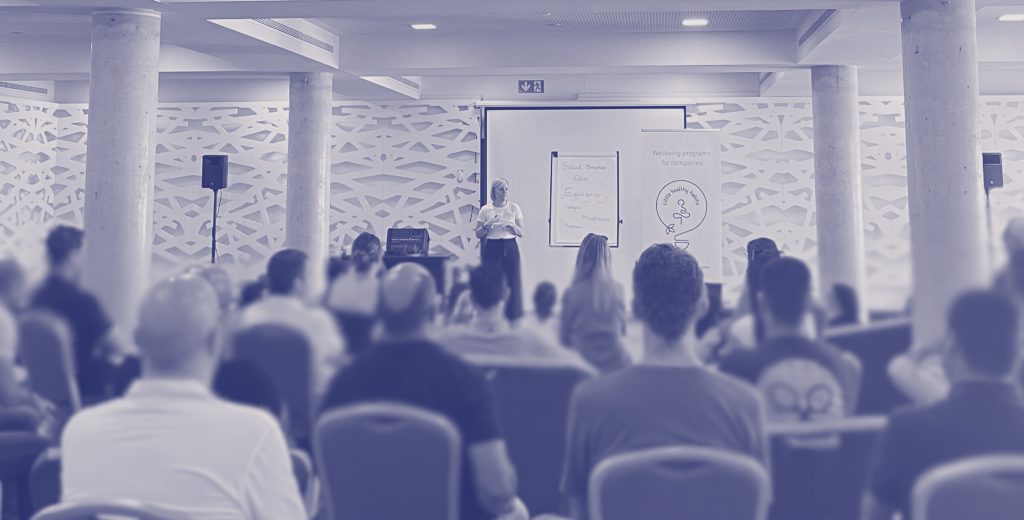
Wellbeing Workshop: Recharging Energy and Rest
We had the opportunity of collaborating with Julia on a training session for one of our clients, focused on rest and healthy habits, and the experience was fantastic. What really stood out is Julia’s ability to combine expertise with warmth and practical advice. She makes a topic as important as rest easy to understand and, more importantly, gives participants simple, practical tools they can start applying in their everyday lives. The feedback we received was extremely positive. Participants appreciated both the clarity of Julia’s explanations and the way she facilitated the session, keeping everyone engaged throughout. We really enjoy working with Julia and look forward to collaborating with her again on future training sessions.
Fernando Robles
Escuela de InspiraciónWhen done right, workplace wellbeing goes beyond how people feel
In many organizations, wellbeing is still associated with one-off activities or additional employee benefits. However, when approached strategically, it directly influences factors such as team energy, the ability to focus, collaboration, communication, motivation and sustainable performance.
Improving wellbeing at work doesn’t mean adding more layers to the already busy schedule. It means introducing tools, habits and approaches that help people work better, with more resources and less stress.
FAQ
Does it make sense to talk about sleep in the workplace?
Absolutely. Sleep has a direct impact on energy, focus, mental clarity and performance, making it far more relevant to the workplace than we sometimes realise.
Is this workshop too theoretical?
No. While it provides the necessary scientific background, the approach is highly practical and focused on realistic, everyday habits.
Can the workshop be delivered online?
Yes. It can be adapted to online, in-person or hybrid formats.
Is the workshop aimed more at leaders or teams?
It works equally well for both, depending on the company's objectives.
Does it need to be part of a larger programme?
Not necessarily. It can work as a standalone workshop or as part of a broader strategy.