Strategic Guide to building a Healthy Workplace in 2026
Talking about a Healthy Workplace in 2026 is no longer an aspirational idea or a passing trend. It is a strategic necessity for any organization that wants to remain competitive, sustainable, and attractive to talent. The current work environment- shaped by hybrid work, digital acceleration, performance pressure, and rising stress levels – has made it clear that traditional management models are no longer sufficient to support people or sustain long-term performance.
A healthy workplace is not simply one that offers isolated benefits or occasional wellbeing initiatives. It is an organization that integrates physical, emotional, mental, social, financial, and professional wellbeing into its culture, processes, and leadership. This approach creates environments where people can grow, collaborate, and perform without compromising their health or personal balance. In this strategic guide, you will find a clear and structured approach to building a healthy workplace step by step, with a realistic, practical perspective adapted to the current needs of organizations.
Signs that your Organization needs to transform into a Healthier Workplace
Before designing any strategy, it is essential to recognize the signs that indicate an organization needs a change in its approach to wellbeing:
1. Widespread Stress and Fatigue
When fatigue is constant, energy levels are low, and motivation fluctuates, it is often a sign of emotional overload or an imbalance between demands and resources.
2. Deterioration of the Work Environment
Frequent conflicts, lack of communication, or distance between teams indicate that something is not working at a relational and cultural level.
3. Increased Turnover or Disengagement
The loss of talent or employees’ emotional disconnection is usually linked to a lack of purpose, recognition, or wellbeing.
4. Difficulty Attracting Talent
More and more professionals prioritize healthy, flexible, and human-centered environments over other factors.
5. Lack of Healthy Habits
Sedentary lifestyles, excessive working hours, or the absence of breaks negatively affect both health and productivity.
Recognizing these signs is the first step toward initiating a conscious transformation.
The Pillars of a Healthy Workplace
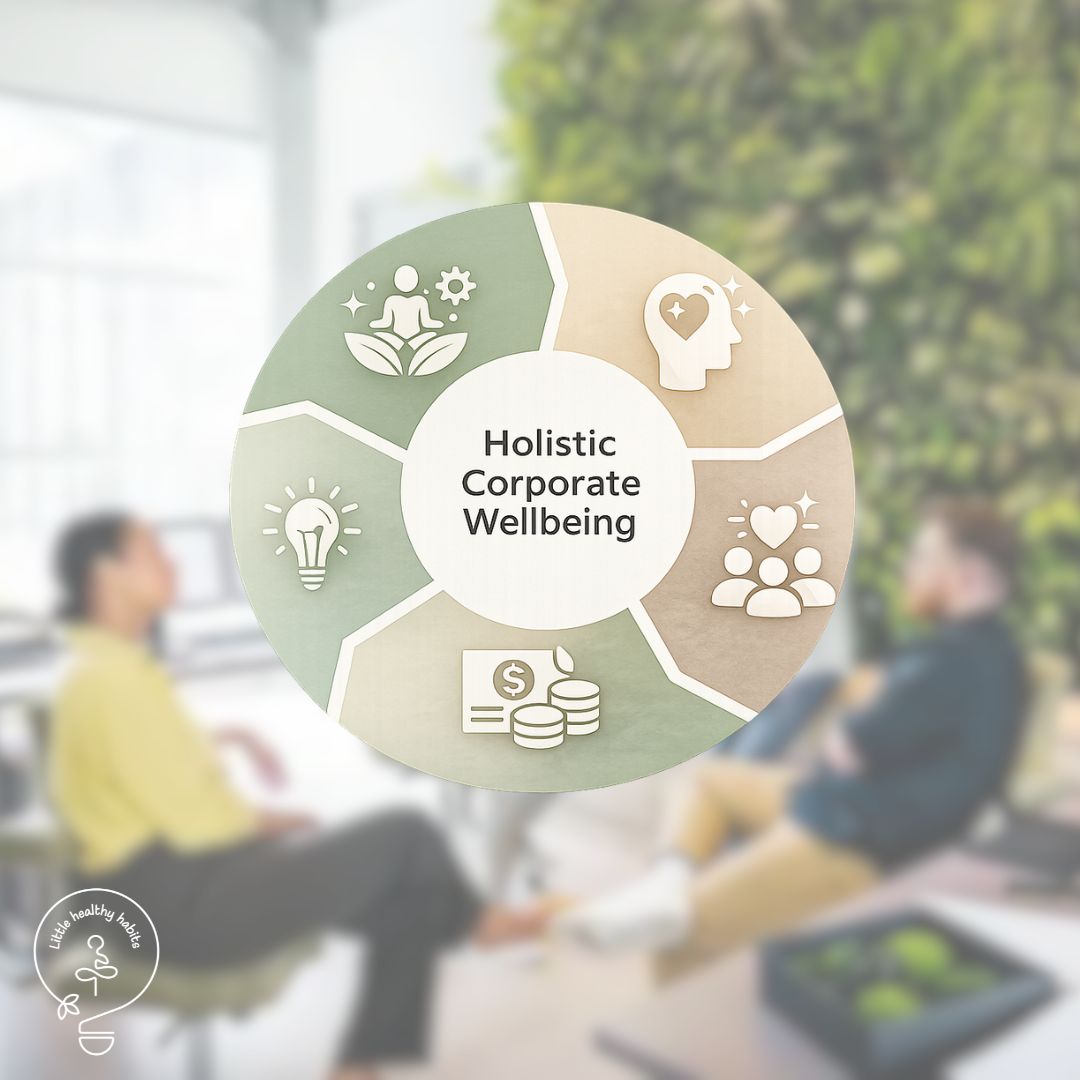
A healthy workplace, for us, is built on five interconnected pillars. Addressing them in isolation reduces their impact; approaching them holistically multiplies the results.
1. Physical and Environmental Wellbeing
Physical wellbeing is the foundation on which everything else is built. When the body isn’t properly cared for, the mind and emotions are affected as well.
- Ergonomics adapted to each role and workstation.
- Promotion of movement: active breaks, stretching, physical activity.
- Balanced nutrition and access to healthy options.
- Adequate spaces: natural light, ventilation, and acoustic comfort.
2. Emotional and Mental Wellbeing
Emotional and mental wellbeing are among the greatest challenges in today’s work environment. It’s not about eliminating stress, but about learning to manage it in a healthy way, building resilience, and improving inner balance to better navigate daily demands.
- Tools for emotional management and self-awareness.
- Mindfulness programs and conscious breaks.
- Emotional support and coaching.
- Safe spaces to express needs and challenges.
3. Social Wellbeing
Human relationships are key to engagement and job satisfaction. A positive and supportive environment strengthens trust and reduces unnecessary conflict.
- Open and respectful communication.
- A culture of recognition.
- Teambuilding and collaboration dynamics.
- A sense of belonging and community.
- Collaborative, empathetic leadership that fosters trust.
- An organizational culture based on shared values.
4. Professional and Purpose-Driven Wellbeing
Professional development and intellectual stimulation drive motivation, innovation, and adaptability. When people can learn, grow, and find meaning in what they do, their engagement increases, as does their ability to face challenges with greater clarity and autonomy. This enhances talent, improves job satisfaction, and fosters innovation.
- Onboarding, continuous training, and skills development.
- Mental stimulation, creativity, and critical thinking.
- Assigning responsibilities that foster autonomy.
- Problem-solving and participation in challenging projects.
- Spaces for reflection on purpose and professional goals.
- An organizational culture aligned with clear, shared values.
5. Financial Wellbeing
Financial wellbeing provides stability and reduces one of the main sources of concern in working life. When people have the tools to manage their resources, plan for the future, and make informed decisions, their peace of mind and focus – as well as their commitment to the organization – improve significantly.
- Financial education and money management training.
- Personal financial planning tools.
- Benefits and support for resource management.
- Guidance for making financial decisions.
Roadmap to Building a Healthy Workplace (Step by Step)
1. Initial Assessment
The assessment makes it possible to understand the true starting point by evaluating:
- Workplace climate.
- Stress and satisfaction levels.
- Leadership style.
- Communication processes.
- Turnover, absenteeism, and performance data.
An honest assessment prevents generic solutions and allows you to prioritize actions with real impact. We collaborate with Healthy Minds Analytics, a company that has won several awards for revolutionizing the prevention of psychosocial risks. They offer an innovative, comprehensive assessment in record time – get to know them in our partners section: https://littlehealthyhabits.com/team/
2. Defining Clear Objectives
Objectives should be SMART and aligned with the business strategy.
Examples (Each objective needs a specific value or percentage before and after):
- Reduce perceived stress.
- Improve workplace climate.
- Increase engagement.
- Retain key talent.
Specific, relevant objectives with clearly defined timelines make it easier to measure progress and support effective decision-making.
3. Designing a Cross-Functional Wellbeing Plan
The plan should integrate the five pillars of holistic wellbeing as well as:
- Specific actions for each pillar.
- Clearly defined responsibilities.
- A realistic budget.
- A quarterly timeline
- Required resources and tools.
It’s not necessary to start with large initiatives; consistency is more important than scale.
4. Fostering Conscious Leadership
Leadership is the greatest accelerator (or barrier) to wellbeing.
A healthy leader:
- Listens actively.
- Manages their own emotions and those of others.
- Prioritizes workloads and pacing.
- Encourages constructive feedback.
- Models healthy habits.
Investing in conscious leadership multiplies the impact of the plan.
5. Communication and Participation
Wellbeing can’t be imposed: it is built with people.
Best practices:
- Clearly communicate the purpose of the plan.
- Invite participation and encourage suggestions for improvement.
- Create internal wellbeing ambassadors.
- Celebrate progress and achievements.
Participation increases the engagement and the sustainability of change.
6. Evaluation and Continuous Improvement
Measurement enables adjustment and continuous improvement.
Key indicators:
- Workplace climate.
- Participation in initiatives.
- Perceived stress.
- Voluntary turnover.
- Absenteeism.
(Anonymous) feedback forms after each session, along with a broader quarterly review allow to adapt the plan to the real needs of the moment.
Success Stories
Case 1: Healthy Breaks and Stress Management
We worked with a company that aimed to improve the daily wellbeing of its teams, especially during periods of high workload and pressure. Following a series of internal changes, there was a widespread sense of accumulated stress and difficulty disconnecting both during and after the workday.
We implemented a weekly program of 20-minute healthy, active breaks integrated into working hours. These sessions provide practical tools to release tension, improve focus, and support emotional self-regulation in everyday work.
We focused on:
- Guided active breaks during the workday.
- Breathing techniques and stress regulation.
- Mobility exercises and tension release.
- Practical tools to regain focus during high-demand moments.
After three months of consistent implementation, we observed an improvement in perceived wellbeing, as well as a greater sense of control over stress. People reported feeling more focused, more energized, and equipped with a range of practical tools to better manage their day-to-day work.
Case 2: Holistic Wellbeing and Sustainable Habits Through Self-Leadership
In another organization, the goal was to address wellbeing and self-leadership more broadly, focusing on the different habits that directly impact performance, decision-making, and the quality of collaboration. Over the course of five months, we developed a biweekly session program in which different pillars were addressed progressively and in a practical, applied way.
The program combined training pills and group coaching, focused on:
- Stress and workload management through expectation management and resilience.
- Building healthy habits and managing personal energy.
- Emotional intelligence, mindfulness, and assertive communication.
- Focus, rest, and deep work, along with mindful calendar management.
- Decision-making and mental clarity.
- Conscious collaboration, active listening, and constructive feedback.
- Personal reflection, self-awareness, and alignment with professional purpose.
Through practical, bite-sized sessions, participants gradually incorporated small, sustainable changes into their daily routines. The impact was reflected in greater awareness of their habits, improved time and energy management, and a better way of working both individually and collectively.
Both processes confirmed that integrating wellbeing strategically and in alignment with company culture not only improves the employee experience, but also has a direct impact on organizational health and on results in the medium and long term.
Where to start when building a healthy workplace?
If you’re here, you’re already taking the first step -and that’s worth recognizing. When you get in touch with us, the first thing we do is carry out a realistic and personalized assessment that allows us to identify priorities and understand your team’s real needs. From there, we co-design a tailored plan aligned with both employee wellbeing and business objectives.
What areas does a healthy workplace include?
A healthy workplace approaches wellbeing in a holistic way. This means supporting physical wellbeing, emotional and mental wellbeing, social wellbeing, professional and purpose-driven as well as financial wellbeing. These areas don’t operate in isolation – when addressed together, they reinforce each other and create more balanced, human, and sustainable environments.
When do you start to see results?
Every company and team has different needs and contexts, so the pace of change may vary. In our experience, initial improvements can be noticed early on, especially in communication and awareness around wellbeing. However, more lasting and meaningful changes typically begin to take shape between 3 and 6 months, as long as the strategy is consistent and applied over time.
Request your healthy workplace assessment
and start building a more human, sustainable, and productive environment.
Conclusion
Building a healthy workplace in 2026 is a strategic decision that directly impacts business sustainability, people’s wellbeing, and the quality of results. Embracing a holistic, people-centered approach – based on conscious leadership and healthy habits – enables the creation of more human, resilient organizations that are better prepared for the future.
Wellbeing is not an add-on: it is the foundation on which a strong, purpose-driven organization is built.


Julia Schröckmayr
Founder Little healthy habits ~ Mental balance & Wellbeing ~ Workshops for you and your team ~ Yogi ~ Globetrotter ~ Sales Leader & Advisor ~ Passionate about bringing mental balance to fast-paced organizations.
Related posts

Take care of your team: Wellness Team Building
"Take care of your employees and they'll take care of your business." (Richard Branson) One of the companies we collaborate with, wrote a wonderful article...

How to collaborate mindfully?
Is it easy to bring people together to work on the same goal? Yes, if everyone gets the chance to collaborate mindfully. What does this mean?
How to Manage Workplace Stress in High-Performance Teams
Is your team performing well - or simply holding it together? Key insights to identify workplace stress and manage it in a more sustainable way.
Post a comment